

For luxury car buyers, enthusiasts and collectors exploring high value car finance, the 2026 Valhalla represents a new era of hybrid hypercar performance, sustainability and supercar soul.
A New Era for Aston Martin Performance
Aston Martins have always been about emotional connection, with elegance first and engineering precision second. The Valhalla proves that hybrid technology can enhance, not dilute, the artistry that defines every car from Gaydon.
Engineering and Performance
Acceleration from 0 to 62 mph takes just 2.5 seconds, with a top speed of 217 mph. The hybrid system also allows eight miles of electric only driving, turning grid locked cities into moments of calm before unleashing the V8’s roar on open roads.
The result is not merely record breaking, it is responsive, flexible and surprisingly civilised. Instant torque from the electric motors removes lag, and the gearbox’s split e drive layout balances power delivery seamlessly between combustion and electric systems.

Andrew Frankel
Journalist
Table of contents
Design and Chassis Development
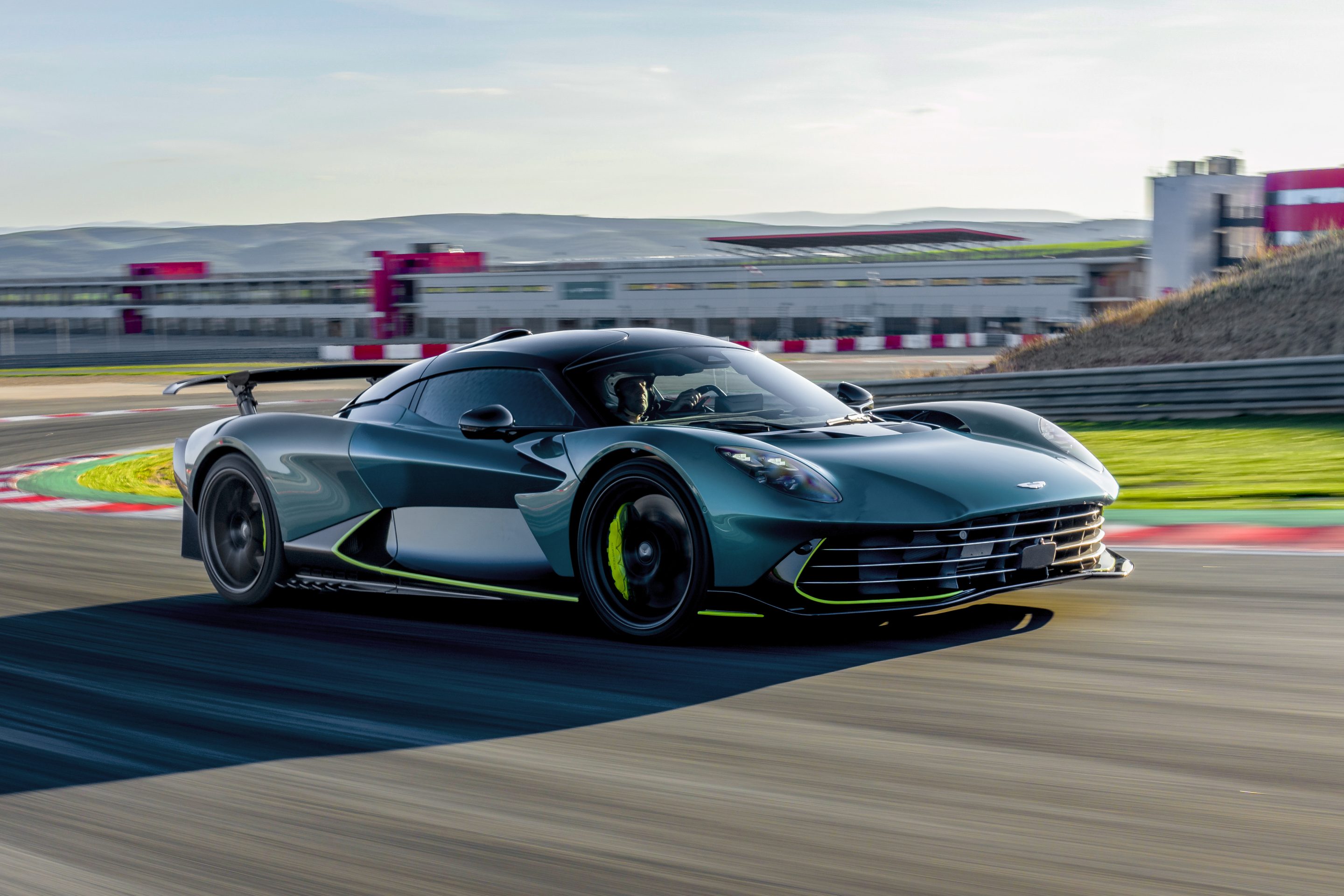
Active aerodynamics include a hidden front spoiler and a rear wing capable of acting as a DRS system or airbrake, generating up to 610 kg of downforce. Above 150 mph the car reduces drag for efficiency, Aston’s way of blending road sensibility with racetrack grip.
Cabin and Usability
Storage is limited, with room for bespoke luggage behind the seats, but refinement is impressive. At motorway speeds, noise levels rival those of the Vantage. From start-up silence in EV mode to the controlled V8 thunder in Race mode, the Valhalla transitions effortlessly between restraint and theatre.
Driving Experience
Push harder and the Valhalla rotates cleanly into corners, adjusting its balance through torque vectoring control. It rewards precision yet forgives ambition, a 1,000 bhp machine that invites rather than intimidates.
Table of contents

Aston Martin Valhalla vs Ferrari 849 Testarossa
Feature |
Aston Martin Valhalla |
Ferrari 849
|
| Power | 1,064 bhp | 1,036 bhp |
| 0–62 mph | 2.5 sec | 2.3 sec |
| Top Speed | 217 mph | 205 mph |
| Drive | AWD Hybrid | AWD Hybrid |
| Weight | ≈ 1,755 kg | ≈ 1,570 kg |
| Price | £850,000 + options | £407,000 + |
| Ride Feel | Supple and balanced | Sharper and firmer |
Is the 2026 Valhalla Worth Its Price Tag?
It represents a strategic evolution, not a vanity project. In the shifting landscape of electrified hypercars, authentic driving emotion could become its rarest and most valuable asset.
Final Verdict
The 2026 Aston Martin Valhalla is both beautiful and brutally fast, yet unexpectedly human. It rides with grace, steers with delicacy and delivers its thousand horsepower with a composure that feels uniquely British
Table of contents
This is not just a technical showcase but a declaration of Aston Martin’s future direction, a place where engineering brilliance meets emotional connection.
A proper Aston Martin, reborn for the hybrid age.
Key Specifications
Specifications |
Detail |
| Engine | 4.0‑litre twin‑turbo V8 with three electric motors |
| Transmission | Eight‑speed dual‑clutch AWD |
| Power | 1,064 bhp @ 6,700 rpm |
| Torque | 640 lb ft @ 6,700 rpm |
| 0–62 mph | 2.5 seconds |
| Top Speed | 217 mph |
| Weight | ≈ 1,755 kg (DIN) |
| Top Speed | 205mph |
| EV Range | 8 miles |
| Price |
from £850,000 |
| Rating | 9/10 |